Troovy Funding: Raises ₹100 Crore From Fireside Ventures After 5x Growth
What's covered
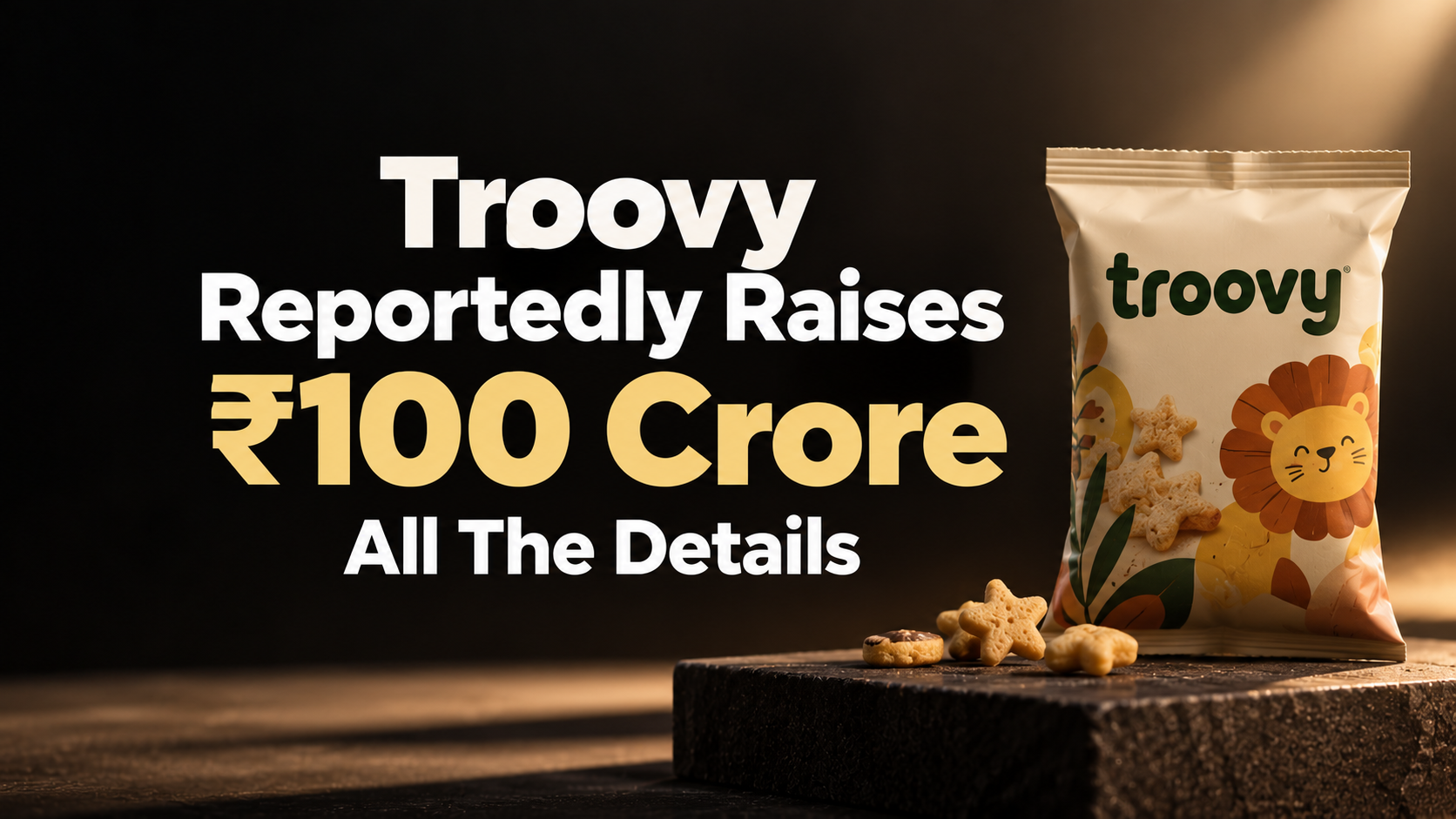
Gurugram-based healthy snacking brand Troovy has raised ₹100 crore in Series B funding, led by Fireside Ventures, with participation from Sharrp Ventures and other investors. Announced on 27 October 2026, the funding comes as the company reports growing fivefold in the eight months following its previous investment.
Founded by Mansi Baranwal and Aditya Mukherjee, Troovy sells packaged food products aimed at children and families, including chips, puffs, millet pasta, sauces and spreads. The company plans to use the fresh capital to expand its offline retail presence, introduce new products and strengthen its manufacturing capabilities.
Troovy Funding Details
| Particulars | Details |
|---|---|
| Funding Amount | ₹100 crore |
| Funding Round | Series B |
| Lead Investor | Fireside Ventures |
| Other Investors | Sharrp Ventures and others |
| Valuation | Reportedly around ₹400 crore |
| Previous Funding | Around ₹45.8 crore in January 2026 |
Swipe sideways to view the full table.
The latest investment follows Troovy's earlier funding rounds, including ₹20 crore raised in May 2025. Fireside Ventures and Sharrp Ventures have supported the company in previous rounds as well.
The reported valuation of approximately ₹400 crore has not been independently confirmed through disclosed transaction documents.
What Does Troovy Do?
Troovy develops packaged food products positioned as alternatives to conventional snacks and everyday processed foods.
Its products include vacuum-cooked potato chips, millet-based pasta, sauces, spreads and milk mixes. The company focuses on using ingredients that appeal to parents looking to reduce their children's consumption of refined sugar, excess oil and certain additives.
For example, Troovy says its vacuum-cooked chips contain 10–12% oil, compared with the 35-40% it cites for conventional potato chips. This is a company-reported comparison and does not necessarily mean every Troovy product is nutritionally superior to competing products.
Troovy's approach is to compete in familiar food categories rather than introduce entirely new eating habits. It wants families to replace products they already consume with alternatives offering different ingredient profiles.
The company also involves parents and children in product development through its Build Together initiative. It says more than 10,000 parents and children are part of its product feedback community.
Troovy Reports 5x Growth in Eight Months
Troovy has reported a fivefold increase in its business over the eight months following its previous investment. However, the company has not disclosed the exact starting and ending revenue figures for this period.
Its historical financial performance provides some context. Troovy's reported revenue increased from approximately ₹1 crore in FY24 to ₹6.1 crore in FY25, showing substantial growth from a relatively small base.
The company's business remains concentrated in snacks, with chips and puffs accounting for approximately 60–70% of sales.
Troovy currently relies heavily on online distribution. Marketplaces and quick-commerce platforms account for approximately 50% of sales, while its own website contributes around 30%. Offline retail accounts for roughly 6%, leaving considerable room for physical-store expansion.
This also explains why the company is raising additional capital despite its recent growth. Building a consumer brand beyond online channels requires investment in distribution, inventory, manufacturing and retailer relationships.
Why Is Troovy Expanding Into Offline Retail?
Troovy plans to expand its retail distribution across North India, initially focusing on Delhi NCR, Rajasthan, Uttar Pradesh, Punjab and Haryana.
Quick-commerce platforms such as Blinkit and Zepto help consumer brands reach customers without immediately building large offline distribution networks. However, physical retail remains important for packaged-food companies because customers frequently discover and purchase snacks at supermarkets and neighbourhood stores.
For Troovy, entering more physical outlets could help increase sales beyond its existing online customer base.
However, offline expansion also introduces additional costs. The company must manage distributor and retailer margins, stock availability, credit periods and competition for shelf space.
Troovy will also need to establish whether its products can attract repeat purchases outside the online channels where much of its initial growth occurred.
How Will Troovy Use the ₹100 Crore Funding?
Troovy plans to invest the fresh capital in product development, manufacturing and distribution.
The company is preparing to enter additional packaged-food categories, including namkeen, biscuits and cookies, with product launches planned from January 2027.
It also intends to strengthen its research and development capabilities to improve product formulations and develop new food products.
An important part of its expansion will involve building a larger offline distribution network. This could help Troovy move from being primarily an online healthy-snacking brand towards competing more broadly in India's packaged-food market.
What Lies Ahead for Troovy?
Troovy's reported fivefold growth suggests that its products have found an early customer base, particularly through online marketplaces and quick commerce.
However, its future growth will depend on whether the brand can successfully expand into physical retail while maintaining customer demand and controlling distribution costs.
The company also faces competition from established packaged-food businesses and newer brands offering products marketed around better ingredients and nutrition.
For Troovy, the ₹100 crore funding provides capital to expand its product range and distribution. The next major test will be whether its online growth can translate into a sustainable, larger-scale FMCG business.