Why RBI Wants Tata Sons to List on the Stock Market

What's covered
The Reserve Bank of India (RBI) has made it mandatory for Tata Sons, the holding company of the Tata Group, to list on the stock market. But why does the RBI want Tata Sons to become a publicly listed company?
In this article, we will discuss why Tata Sons is classified as an NBFC, why the RBI requires large NBFCs to list and how stock market listing helps the regulator achieve its objectives.
Why Tata Sons Is Classified as an NBFC
Tata Sons is the principal investment holding company of the Tata Group. Unlike Tata Motors or Tata Steel, its primary business involves holding investments in group companies and generating income through dividends and other investment returns.
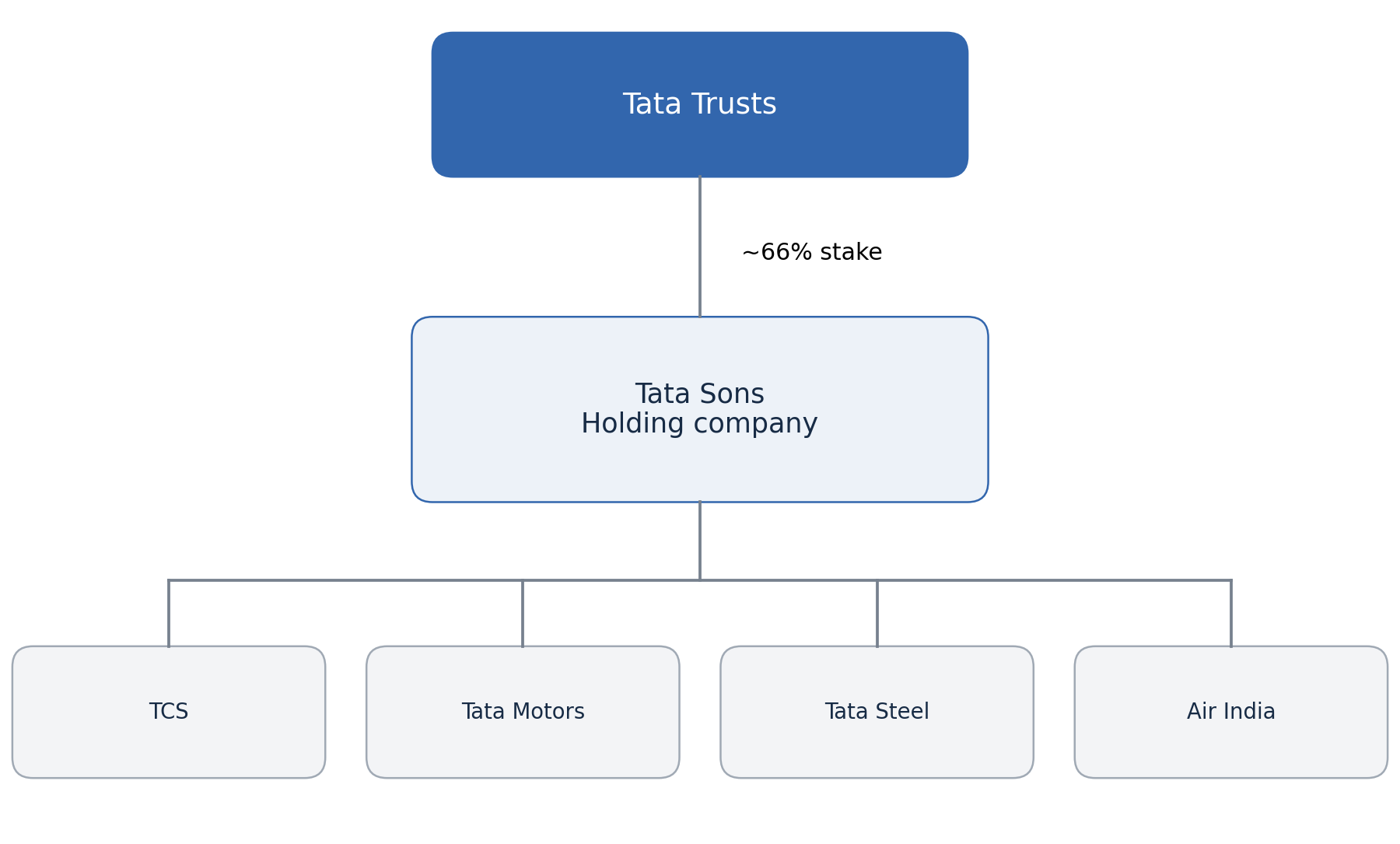
This places Tata Sons under a special category of Non-Banking Financial Companies (NBFCs) known as Core Investment Companies (CICs).
A CIC is a company that holds at least 90% of its net assets in qualifying investments and loans to group companies, with at least 60% in qualifying equity investments in group companies.
Although these companies do not necessarily lend money to the general public, their financial decisions can influence the stability of several businesses within a corporate group.
Why RBI Made Listing Mandatory for Large NBFCs
In October 2021, the RBI introduced a Scale-Based Regulation framework that divided NBFCs into four layers based on their size, nature of operations, interconnectedness and risk to the financial system.
The idea was simple: a financial institution with a small balance sheet should not face the same regulatory requirements as one whose failure could affect the broader economy.
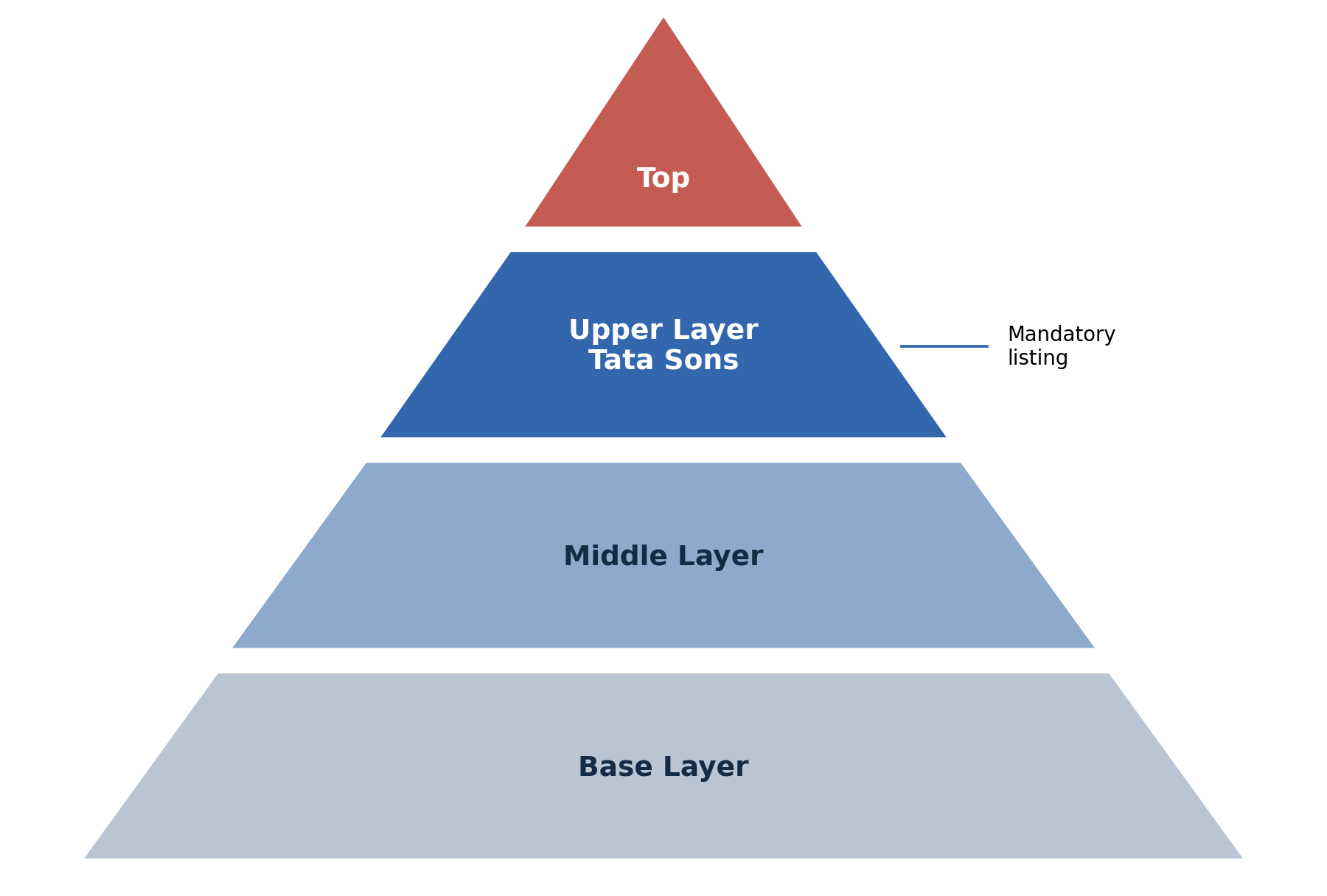
In September 2022, Tata Sons was classified as an Upper Layer NBFC. Companies in this category are required to list on the stock market within three years of their classification.
This gave Tata Sons until September 2025 to comply with the listing requirement.
What Does RBI Achieve by Listing Tata Sons?
The objective of mandatory listing is not necessarily to help companies raise capital. Instead, it is to improve financial transparency, strengthen corporate governance and introduce greater market discipline.
Greater Financial Transparency
While unlisted companies are also subject to financial reporting requirements, listed companies face additional disclosure obligations under SEBI regulations.
A listed Tata Sons would have to publicly disclose more information about its financial performance, material business developments and related-party transactions. This would give investors, creditors and regulators greater visibility into how the parent company allocates capital across the Tata Group.
Managing Systemic Risk
Systemic risk refers to the possibility that financial difficulties at one institution could spread to other businesses or the broader financial system.
Tata Sons holds investments across industries ranging from technology and automobiles to aviation, steel and financial services. It also plays an important role in allocating capital to new businesses within the group.
Suppose Tata Sons borrows heavily to finance a new business that subsequently suffers significant losses. The parent company may have to sell investments, reduce funding to other businesses or restructure its financial obligations.
Depending on the financial arrangements involved, the consequences may extend beyond the company where the losses originated.
Listing does not eliminate these risks, but greater disclosure can help market participants identify them earlier.
Introducing Market Discipline
Market discipline is the process through which investors and creditors influence a company's financial behaviour.
When a company is listed, its investment decisions, profitability and financial health are continuously evaluated by investors. Poor capital allocation or excessive risk-taking can result in a lower valuation and make raising fresh capital more expensive.
This creates an additional layer of accountability alongside regulatory supervision.
Why Repaying Debt Was Not Enough for Tata Sons
In 2024, Tata Sons repaid its standalone debt and applied to surrender its CIC registration. The objective was to exit the regulatory framework that required it to list on the stock market.
However, the RBI's definition of public funds extends beyond direct borrowing from banks and financial institutions. It also considers indirect access to such funds.
Several Tata Group companies that have access to public funds also hold shares in Tata Sons. These financial linkages reportedly played a role in the RBI's decision to reject the deregistration application.
The company's size is another important consideration. In June 2026, the RBI revised its classification criteria to include NBFCs with assets of ₹1 lakh crore or more in the Upper Layer.
With assets of approximately ₹2.01 lakh crore as of March 2026, Tata Sons remains well above this threshold.
Repaying debt, therefore, does not automatically exempt Tata Sons from the regulatory framework.
Why Tata Trusts Wants to Keep Tata Sons Private
Tata Trusts collectively own approximately 66% of Tata Sons, making the charitable trusts its controlling shareholders.
Unlike conventional corporate promoters, the trusts use income received from Tata Sons to support philanthropic activities across healthcare, education and rural development.
One of the concerns surrounding a public listing is that it could introduce greater pressure to deliver short-term financial performance, potentially affecting the group's approach towards long-term investments.
Keeping Tata Sons private provides its controlling shareholders with greater flexibility in making strategic decisions without being directly exposed to stock market expectations.
Is Listing the Only Way to Reduce Financial Risk?
A stock market listing does not automatically make a financial institution safer. The RBI can impose strict disclosure requirements, exposure limits and corporate governance standards even on privately held financial companies.
Tata Sons also has a different risk profile from a heavily indebted NBFC that borrows money from banks and lends it to customers.
However, granting an exemption to Tata Sons could create a precedent for other large corporate holding companies seeking to avoid similar regulatory requirements.
The larger question, therefore, is whether financial risk should be assessed solely through a company's standalone balance sheet or through its financial relationships with the entire corporate group.
For the RBI, the listing requirement represents an attempt to bring greater public scrutiny to systemically important financial institutions. For Tata Trusts, the challenge is preserving the ownership structure and long-term philosophy that have shaped the group for more than a century.