Tessolve Raises $75 Million: Why Investors Are Betting on India's Semiconductor Industry
What's covered
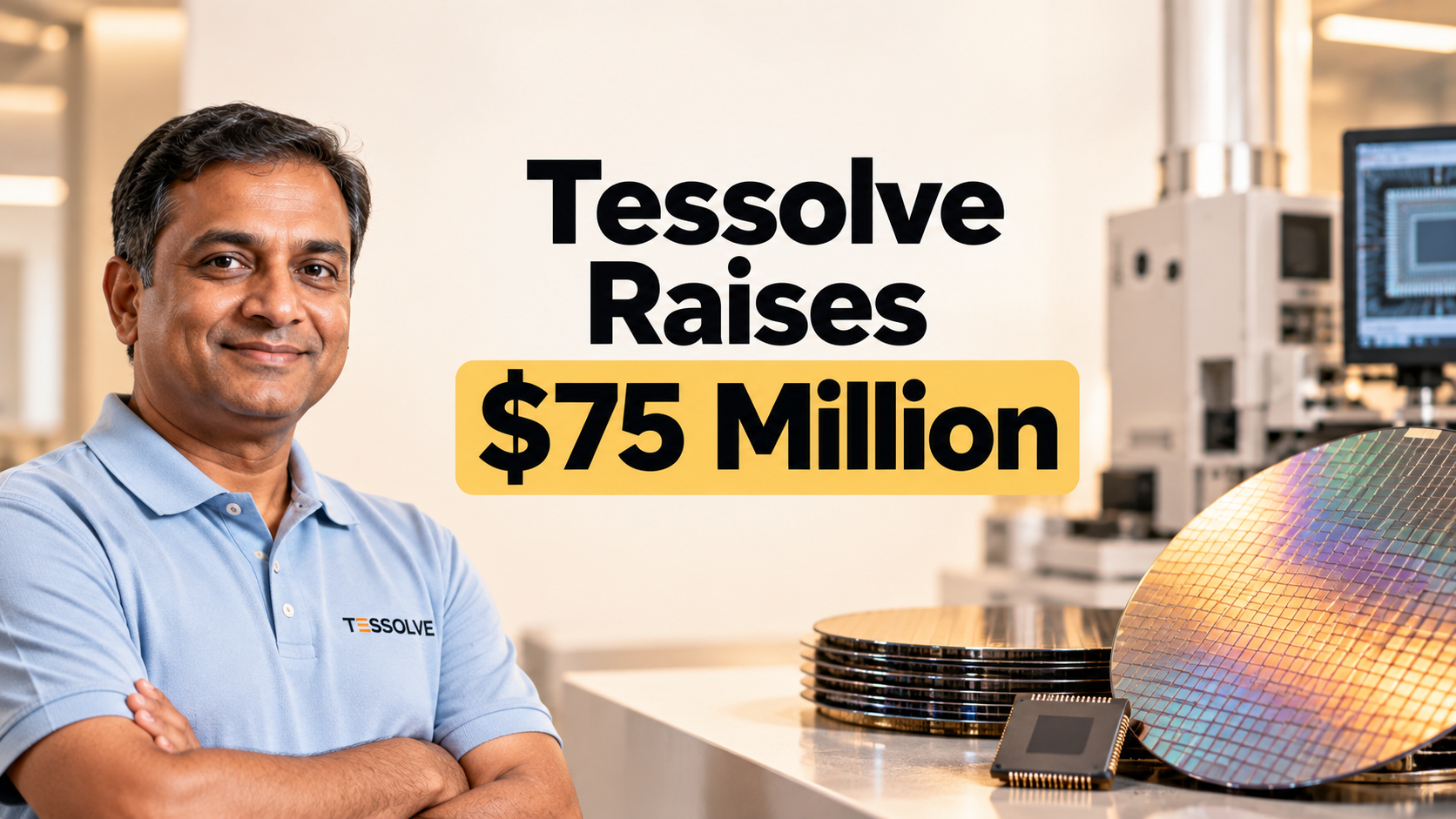
Tessolve Semiconductor, a Bengaluru-based semiconductor engineering company, has raised $75 million from US-based Vector Line Capital to fund acquisitions and expand its global business. The investment comes just over a year after the company secured $150 million from TPG in September 2025.
Unlike companies that manufacture semiconductor chips, Tessolve helps businesses design, develop and test them. With growing demand for advanced chips used in artificial intelligence, data centres and automobiles, Tessolve is looking to expand its position in the global semiconductor industry.
What Does Tessolve Semiconductor Do?
Founded in 2004, Tessolve provides engineering services to companies developing semiconductor chips and electronic products. It became part of Hero Electronix in 2016 and has since expanded its operations internationally.
Developing a semiconductor chip involves several stages before it reaches the market. Engineers must design its circuits, verify whether they work correctly and test the finished chip for defects. Tessolve helps companies complete these activities without managing every part of the process internally.
Its services include chip design, verification, semiconductor testing and embedded systems engineering. The company earns revenue by providing these specialised services to semiconductor manufacturers and technology businesses.
As of September 2025, Tessolve employed more than 3,000 engineers across countries including India, the US, Germany, the UK, Singapore and Malaysia. It also worked with 18 of the world's top 20 semiconductor companies.
Why Are Investors Betting on Tessolve?
The latest investment comes from Vector Line Capital, a US-based investment firm focused on the semiconductor industry. This marks its first investment in India, joining existing Tessolve investors TPG and Novo Tellus Capital Partners.
One reason behind this interest is Tessolve's growth record. Its annual revenue increased from $25 million in FY16 to more than $150 million in FY25, representing growth of over six times in nine years.
Another factor is the increasing complexity of semiconductor development. Artificial intelligence and high-performance computing require more powerful chips, which involve extensive design, verification and testing.
For semiconductor manufacturers, outsourcing specialised engineering work can reduce the need to develop every capability internally. Tessolve benefits from this demand through its experienced engineers, testing laboratories and established relationships with global customers.
How Will Tessolve Use the $75 Million?
Tessolve plans to use the funding primarily for strategic acquisitions that can strengthen its technical capabilities and expand its international presence.
The company is already in advanced discussions for multiple acquisitions. Buying established engineering businesses can provide access to experienced employees, specialised technology and existing customers much faster than building these capabilities internally.
This is not a new strategy for Tessolve. In November 2024, the company acquired Germany-based Dream Chip Technologies for approximately ₹400 crore, strengthening its semiconductor design capabilities.
Through these acquisitions, Tessolve aims to offer a wider range of engineering services, from initial chip design to testing and validation, while expanding its presence in international markets.
How Fast Is Tessolve Growing?
Tessolve's revenue increased from approximately ₹1,157 crore in FY25 to ₹1,526 crore in FY26, representing growth of around 32%.
The company expects revenue to cross ₹2,000 crore in FY27 and has a longer-term ambition of reaching $500 million in annual revenue within three to four years.
An important part of this expansion is its ability to provide multiple services to the same customer. A semiconductor company that initially hires Tessolve for testing may later use its design, verification and embedded engineering capabilities.
However, while revenue growth has been strong, detailed profitability and cash-flow figures are not publicly available in the funding disclosures. This makes it difficult to assess how much of the expansion is translating into profits.
The Bigger Opportunity in India's Semiconductor Industry
India's semiconductor ambitions are often associated with chip manufacturing plants, but engineering services represent another important opportunity.
Before a chip reaches a manufacturing facility, companies invest significant resources in designing, developing and testing it. Businesses like Tessolve can participate in this global supply chain without owning expensive chip fabrication plants.
The growing use of artificial intelligence, cloud computing and advanced electronics is increasing demand for specialised semiconductor engineering. Tessolve is positioned to benefit because it already serves major international customers and operates across several stages of chip development.
However, competition for experienced engineers, rapid technological changes and the challenge of integrating acquisitions could affect its expansion plans.
What This Funding Means for Tessolve
Tessolve's $75 million funding is significant because the company is raising capital to expand an already established business rather than develop an unproven product.
Its strong revenue growth, global customer relationships and specialised engineering capabilities have helped attract major international investors. The latest investment gives Tessolve additional resources to acquire businesses and expand its services.
The opportunity is substantial, but acquiring companies alone will not guarantee success. Tessolve must integrate new teams, maintain its technical capabilities and convert growing semiconductor demand into profitable projects.
The real test will be whether Tessolve can use these acquisitions to become a larger global semiconductor engineering company while sustaining its growth and profitability.