India Delayed UPI’s 0.4% Merchant Fee Until After Diwali: Impact Explained
What's covered
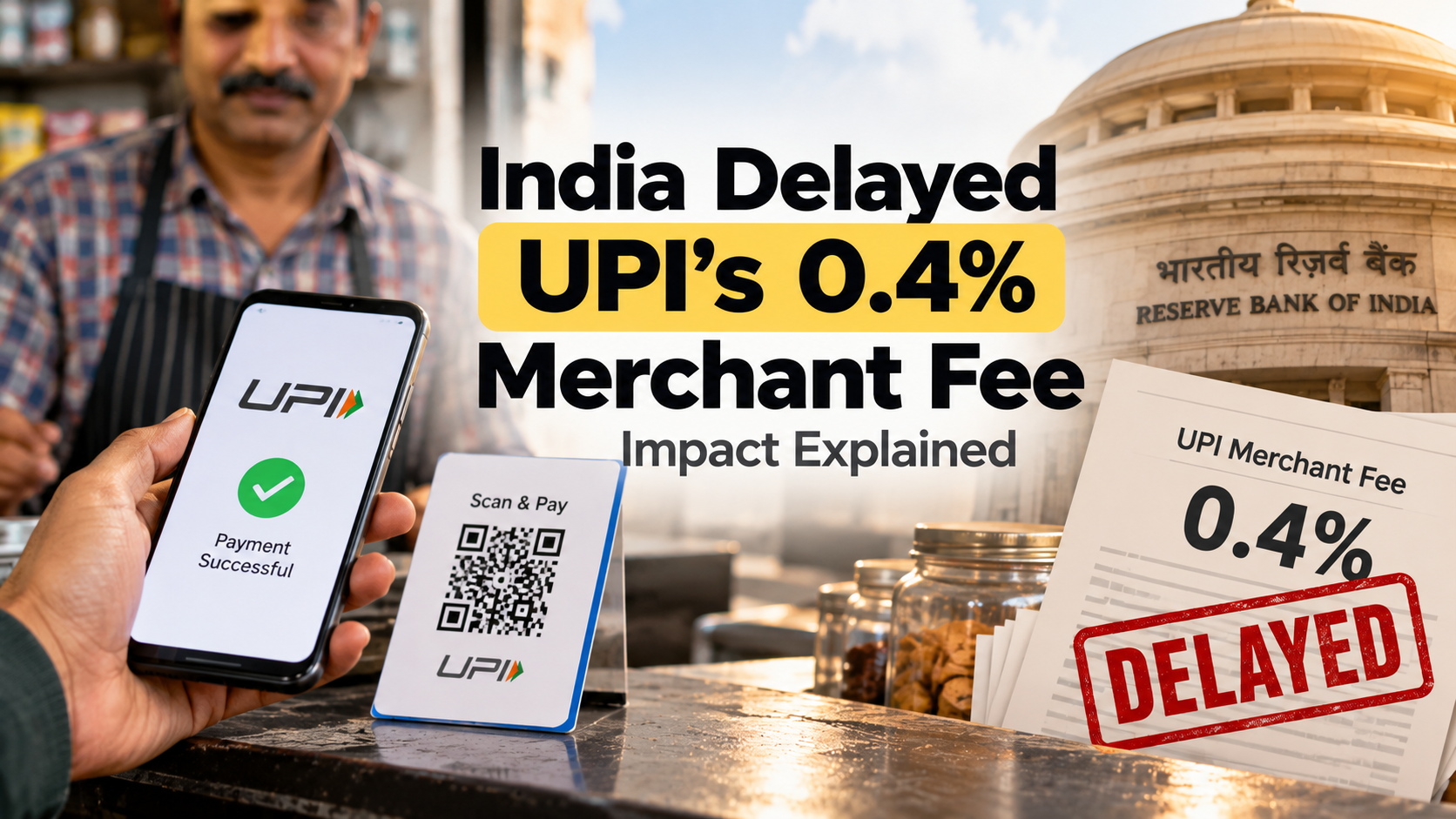
India has delayed its plan to introduce a 0.4% fee on certain UPI payments above ₹2,000. The new charges were supposed to begin on 15 October 2026, but the National Payments Corporation of India (NPCI) has postponed them until after Diwali.
The decision comes as retailers prepare for the festive shopping season, when millions of Indians spend money on clothes, electronics, jewellery and other products.
For now, businesses will not have to pay the proposed additional fee. But why is India planning to charge for UPI payments in the first place, and what could this mean for customers, merchants and payment companies?
What Is the New 0.4% UPI Fee?
The proposed charge is called the Merchant Discount Rate (MDR). In simple words, it is a fee that a business pays when it accepts certain digital payments.
Under the proposed rules, eligible UPI payments above ₹2,000 would attract a fee of 0.4% of the transaction value, with a maximum charge of ₹300.
For example, if you buy a product worth ₹5,000 using an eligible UPI payment, the shopkeeper would have to pay ₹20 as a processing fee. If you spend ₹10,000, the fee would increase to ₹40.
However, this does not mean that every UPI payment will become chargeable. Money sent to friends or family would remain free. Merchant payments of ₹2,000 or less would also remain free, while certain smaller businesses would be exempt under the proposed rules.
Most importantly, the fee would be charged to merchants rather than directly to customers.
Why Has India Delayed the UPI Fee?
The biggest reason behind the delay is the timing.
Diwali is one of the busiest shopping periods in India. Businesses often depend on festive sales to generate a large part of their annual revenue.
Introducing a new payment fee just before Diwali would increase costs for some retailers. It would also leave businesses with little time to understand the rules and make changes to their payment systems.
Merchant groups raised concerns about these issues, following which NPCI decided to postpone the rollout on 13 October 2026.
However, the fee has not been cancelled. It is expected to be introduced after Diwali, although the exact implementation date has not yet been announced.
Why Does India Want to Charge for UPI Payments?
UPI has become popular largely because it is convenient and generally free for customers and merchants.
Since January 2020, ordinary UPI payments made directly from bank accounts have operated under a zero-MDR system. This means merchants have generally not had to pay a percentage of each payment they receive.
However, running UPI is not free.
Banks and payment companies spend money maintaining their systems, processing transactions, preventing fraud and helping customers when payments fail.
As more people use UPI, these costs continue to increase. NPCI chief executive Dilip Asbe has estimated that operating the UPI system costs around ₹21,000 crore every year.
The government has provided financial support to banks and payment companies, but this does not cover all the costs.
By introducing a small fee on certain higher-value merchant payments, India hopes to help these companies recover some of the money they spend running the system.
This could particularly matter for companies such as PhonePe and Google Pay, which have built large payment networks but do not normally earn a direct merchant fee from ordinary bank-account-based UPI transactions.
How Will the New UPI Fee Affect Shopkeepers?
For businesses, the new fee would mean an additional expense on eligible transactions.
Consider a shopkeeper who sells a product for ₹5,000 and makes a profit of ₹250 before payment charges. If the shopkeeper has to pay ₹20 as MDR, the profit falls to ₹230.
Although ₹20 may not sound like much, it represents 8% of the shopkeeper's original profit.
For businesses making hundreds or thousands of such sales, these charges could add up. Shops selling products with low profit margins may feel the impact more strongly.
Some retailers may choose to absorb the cost, while others could increase product prices slightly or encourage customers to use different payment methods.
However, smaller payments would remain outside the proposed fee. This means that businesses receiving mostly low-value UPI payments may see little change.
Will Customers Have to Pay Extra for UPI?
Under the proposed framework, customers would not be directly charged the 0.4% fee. It would be paid by eligible merchants accepting UPI payments.
For example, if you pay ₹5,000 at a store, the payment app would not separately charge you ₹20 under the proposed MDR system. The processing charge would apply to the merchant.
However, there could be an indirect impact. If businesses decide to recover these additional costs by increasing their prices, customers might eventually end up paying slightly more for some products.
It is also important to remember that payments to friends and family would remain free.
Industry estimates suggest that more than 95% of UPI merchant transactions by number would remain outside the proposed charges.
How Could PhonePe, Google Pay and Other Payment Companies Benefit?
The new fee could create an additional source of income for banks and payment companies.
At present, platforms such as PhonePe and Google Pay earn money mainly through services such as payment devices, merchant subscriptions, financial product distribution and other offerings.
We have also explained this business model in our article on how PhonePe and Google Pay made money when UPI was free.
Introducing MDR would allow eligible transactions to generate revenue directly from payment processing.
However, the entire 0.4% fee would not go to PhonePe or Google Pay. It would be shared among the banks and payment companies involved in completing the transaction.
For instance, a ₹10,000 eligible payment would generate ₹40 in MDR, but that amount would be divided among several participants.
NPCI has estimated that the proposed charges could help the UPI industry recover around ₹13,000 crore to ₹15,000 crore in the first year.
Companies such as Pine Labs, which provide payment technology to businesses, could also benefit depending on their role in processing these transactions and how the fees are shared.
What Happens After Diwali?
As of 14 October 2026, NPCI has not announced a new date for introducing the 0.4% UPI merchant fee.
For now, retailers can continue accepting ordinary bank-account-based UPI payments without the proposed additional charge during the festive shopping season.
The bigger question is what happens once the fee is introduced.
UPI became popular because it made digital payments simple, fast and affordable. Millions of businesses adopted it because they could accept payments without paying the kind of transaction fees normally associated with card payments.
But keeping payments free also means that banks and payment companies need other sources of revenue to cover the cost of running the system.
The proposed 0.4% fee is an attempt to solve this problem by charging certain larger merchant payments while keeping smaller transactions free.
The real challenge will be making UPI financially sustainable without making digital payments expensive for merchants. If India can maintain that balance, the new fee could help support the payment system's future growth without taking away the benefits that made UPI so popular.