ThinkMetal Raises ₹27 Crore to Expand Its Metal 3D Printing Technology
What's covered
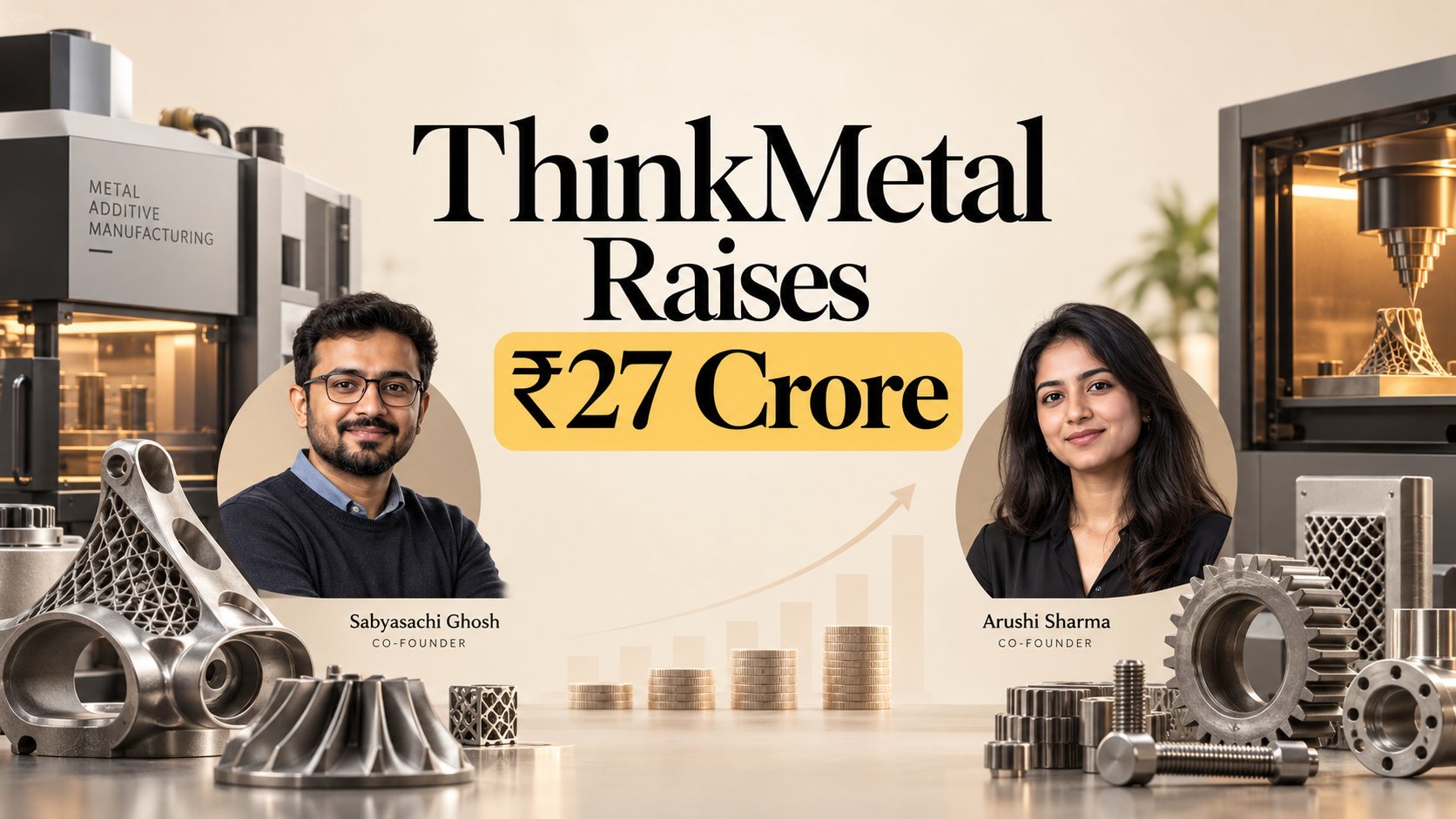
ThinkMetal, a Chennai-based manufacturing technology startup, has raised ₹27 crore in a funding round led by IAN Alpha Fund, with participation from 3i Partners and existing investors. The company plans to use the money to improve its technology, expand research and bring its metal 3D printing solutions to more industrial customers.
Founded in 2021 by Sabyasachi Ghosh and Arushi Sharma, ThinkMetal is developing technology that could make manufacturing complex metal components faster and more affordable. Its solutions primarily target industries such as automotive, aerospace and defence, where precision and production time are particularly important.
What Does ThinkMetal Actually Do?
ThinkMetal develops machines, materials and software that allow manufacturers to produce metal components using 3D printing technology.
In conventional manufacturing, companies often start with a block of metal and cut or drill it into the required shape. This works well for many products, but manufacturing complex components can require expensive equipment, multiple production stages and considerable time.
ThinkMetal uses a different approach. Its technology, called Metal Fused Additive Manufacturing (MFAM), builds components layer by layer using specialised metal materials. The printed components then undergo further processing to achieve the required strength.
The company has developed three main products:
- SistemT1: An industrial metal 3D printing system used to manufacture precision components.
- FuseX: Specialised metal feedstock used in the printing process.
- Thinkware: Software that helps manufacturers prepare designs and manage printing operations.
Together, these products create an integrated manufacturing system. ThinkMetal claims its technology can produce certain metal components up to 10 times faster and at half the cost of traditional methods. However, actual savings depend on the component and manufacturing process.
Why Are Investors Betting on ThinkMetal?
One of ThinkMetal's biggest opportunities comes from a common problem in manufacturing: producing customised metal parts in small quantities can be expensive and time-consuming.
For example, an automotive manufacturer developing a new component may need specialised tools or prototypes before starting mass production. Manufacturing these parts through conventional methods can take several weeks, especially when designs are complex or frequently modified.
ThinkMetal is trying to shorten this process by allowing manufacturers to produce specialised components faster, without relying on multiple manufacturing stages.
Another important factor is its focus on developing manufacturing technology in India. Several advanced industrial applications depend on imported machines and materials. By developing its own equipment, metal feedstock and software, ThinkMetal is attempting to build domestic alternatives.
The company has also reported more than 17 intellectual property filings, reflecting its focus on technology development.
However, the strongest reason investors may find ThinkMetal attractive is its transition towards commercialisation. After spending years developing its technology, the company is now focusing on getting more industrial customers to adopt its products.
This creates an opportunity to participate in the growth of an emerging manufacturing technology business, although the company's revenue growth and profitability have not been publicly established.
How Does ThinkMetal Make Money?
ThinkMetal primarily serves industrial customers, making it a business-to-business (B2B) company.
Its product portfolio suggests that equipment sales and specialised materials could become important revenue sources.
The company can sell its SistemT1 printing systems to manufacturers that want to produce metal components internally. Once customers install the machines, they may also need to purchase compatible FuseX materials regularly.
This creates the possibility of recurring material sales alongside equipment revenue. Thinkware provides the software needed to operate the manufacturing system, although separate software pricing or subscription revenue has not been publicly confirmed.
This model could be attractive because ThinkMetal is developing an entire manufacturing ecosystem rather than selling only a machine. However, the company has not disclosed detailed revenue figures, margins or the contribution of individual products.
How Will ThinkMetal Use the ₹27 Crore Funding?
The fresh capital will primarily support product development, materials research, hiring and commercial expansion.
A major priority is improving the company's printing technology and expanding the types of metals it can work with. Different industries have different requirements, so supporting more materials could help ThinkMetal serve a wider range of customers.
The company also wants to strengthen its engineering and research teams while accelerating industrial adoption.
This last part is particularly important. Manufacturing companies usually require extensive testing before adopting new equipment because production quality, reliability and cost directly affect their operations.
ThinkMetal therefore needs to demonstrate that its technology works consistently in real manufacturing environments, not just during product demonstrations.
How Big Is the Market Opportunity?
India's metal additive manufacturing industry offers a growing opportunity for companies developing advanced manufacturing technologies.
According to Mordor Intelligence, the Indian metal additive manufacturing market was estimated at $253.45 million in 2025 and is projected to reach $572.46 million by 2031, representing an annual growth rate of approximately 14.56% during the forecast period.
Demand is being supported by industries such as aerospace, defence, automotive and industrial engineering, where manufacturers increasingly require complex and specialised components.
ThinkMetal could benefit from this shift, particularly in applications where conventional manufacturing is slower or more expensive.
However, it faces competition from international companies such as EOS and Desktop Metal, alongside Indian manufacturers such as Intech Additive Solutions. These companies use different metal printing technologies and compete across various industrial applications.
ThinkMetal's competitive position will depend on whether it can deliver reliable manufacturing quality at a lower overall cost.
What Are the Biggest Challenges?
ThinkMetal operates in an industry where developing the technology is only the first step. Getting manufacturers to adopt it commercially can be much harder.
Industrial customers need confidence that printed components will meet their required standards for accuracy, durability and strength. Industries such as aerospace and defence may also require extensive testing and certifications before adopting new manufacturing processes.
Cost is another challenge. Even if a printing system produces parts faster, manufacturers must consider equipment prices, materials, maintenance and post-processing expenses before deciding whether the technology makes financial sense.
Scaling production could also require substantial capital, as industrial hardware businesses must manage manufacturing, quality control, inventory and technical support.
Most importantly, ThinkMetal has not publicly disclosed enough financial information to determine whether its commercial operations are already profitable or how quickly customer demand is growing.
What Does This Funding Mean for ThinkMetal?
ThinkMetal's ₹27 crore funding highlights growing investor interest in companies developing advanced manufacturing technology in India. Its opportunity comes from making precision metal manufacturing faster, more accessible and potentially less dependent on imported solutions.
Unlike many technology startups that primarily develop software, ThinkMetal must prove both the technical performance and commercial economics of a physical manufacturing system.
The company has developed an integrated platform combining printing equipment, proprietary materials and software. This could create a strong business if customers adopt its machines and continue purchasing materials over time.
However, the real test will be whether ThinkMetal can convert its technology into large commercial orders, repeat customers and sustainable revenue.
The ₹27 crore funding gives the company more resources to pursue that transition, but its long-term success will depend on proving that metal 3D printing can deliver measurable cost and productivity advantages for Indian manufacturers.