Pine Labs UPI MDR Impact on Its Revenue & Business Model

What's covered
- How Does Pine Labs Make Money?
- Why Was UPI Difficult to Monetise?
- What Changes Under the New UPI MDR Rules?
- How Important Is UPI to Pine Labs?
- How Much Additional Revenue Could Pine Labs Earn?
- Why Pine Labs Has a Bigger Opportunity Beyond MDR
- Could MDR Also Create Problems?
- Will UPI MDR Be a Game Changer for Pine Labs?
Pine Labs operates one of India's largest merchant payment networks, helping businesses accept payments through card machines, QR codes and digital checkout systems. In Q1 FY27, the company processed transactions worth ₹4.22 lakh crore, with UPI accounting for more than 70% of transactions at its digital checkout points. Yet, despite this enormous payment activity, Pine Labs could not directly earn a merchant fee on most regular UPI transactions.
That could change with the proposed introduction of Merchant Discount Rate (MDR) on select UPI payments. A 0.4% charge could open a new revenue opportunity for payment companies, including Pine Labs. However, the actual benefit depends on how many transactions qualify for MDR and how much of that fee Pine Labs can retain.
How Does Pine Labs Make Money?
Pine Labs started as a payment technology company and has gradually expanded into a broader commerce platform. Its payment terminals allow merchants to accept cards, UPI and other digital payment methods, while its software helps businesses manage transactions, offer EMI options and run customer loyalty programmes.
The company earns money through several channels. Merchants pay subscription fees for checkout infrastructure, while payment processing and related services generate transaction-linked revenue. Pine Labs also earns through affordability solutions, gift cards, prepaid products and issuing services for businesses and financial institutions.
In Q1 FY27, Pine Labs reported revenue of ₹737 crore, up nearly 20% from ₹616 crore a year earlier. Its digital infrastructure and transaction platform segment contributed ₹499 crore, while issuing and acquiring platforms generated ₹238 crore.
Transaction processing is important, but the business also depends on software subscriptions and services that help merchants manage and increase sales. These revenue streams are covered in more detail in our article on how Pine Labs makes money.
Why Was UPI Difficult to Monetise?
UPI grew rapidly in India partly because merchants could accept payments without paying the processing charges normally associated with card transactions.
Since January 2020, regular bank-account-based UPI merchant payments have operated under a zero-MDR framework. A merchant accepting a ₹5,000 payment through normal UPI generally received the entire ₹5,000 without a direct MDR deduction.
For payment companies, this created an unusual business problem. They needed to maintain payment infrastructure, support merchants and process growing transaction volumes, but could not directly charge MDR on those UPI payments.
Pine Labs was not completely dependent on MDR because it could charge for terminals, software and other merchant services. Nevertheless, the rapid shift towards UPI meant an increasing share of transactions passed through a payment method with limited direct fee income.
The same challenge shaped the business models of companies such as PhonePe and Google Pay. Instead of earning directly from regular UPI transfers, these platforms developed alternative sources of revenue, including merchant services and financial product distribution. Their strategies are explained in our article on how PhonePe and Google Pay made money when UPI was free.
What Changes Under the New UPI MDR Rules?
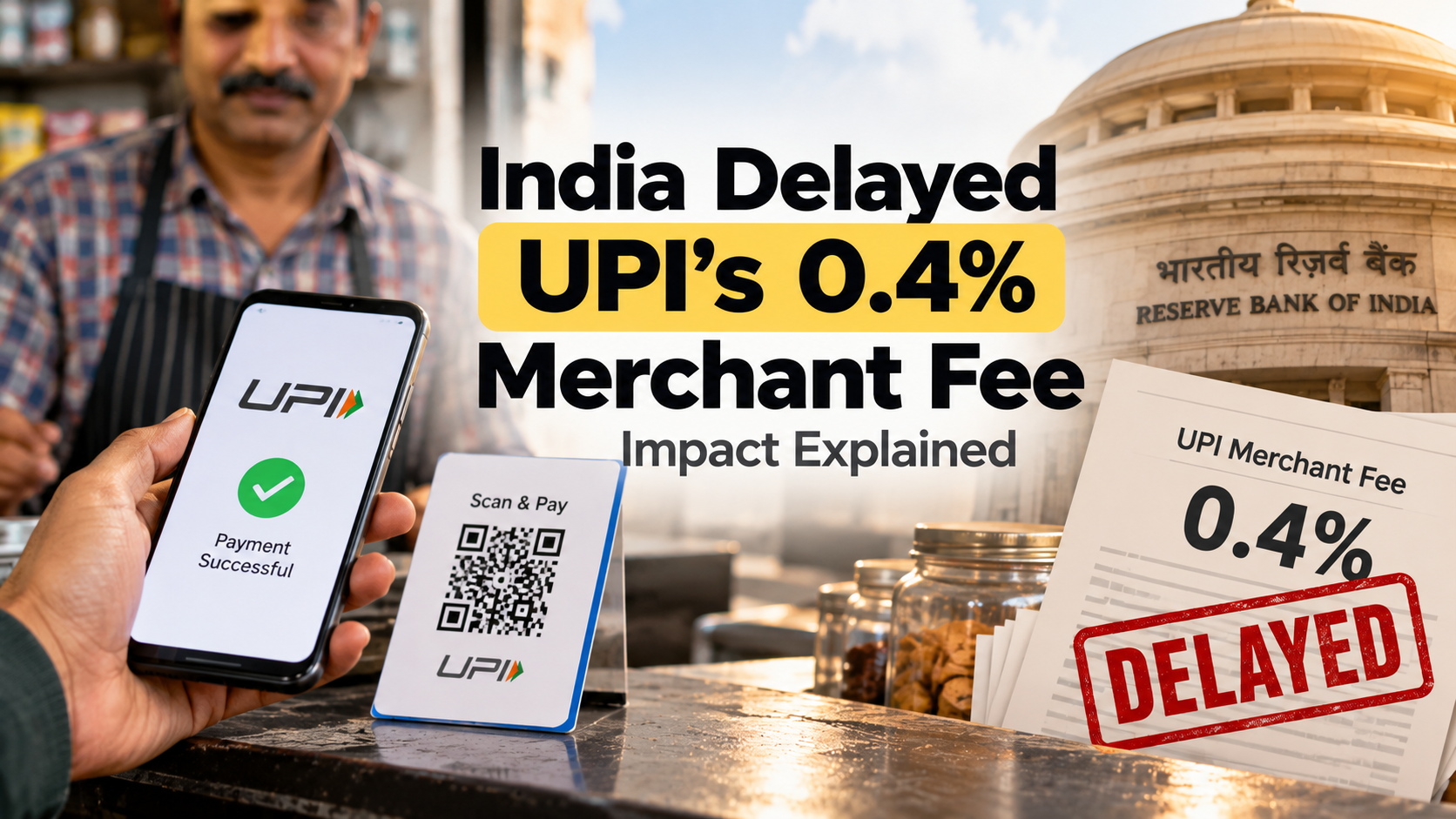
The announced framework introduces a 0.4% MDR on certain merchant UPI payments above ₹2,000. For example, an eligible ₹10,000 payment would attract an MDR of ₹40. For transactions above ₹75,000, the charge is capped at ₹300.
However, the charge does not apply equally to every business. Small merchants meeting the exemption conditions remain outside the framework, while certain merchant categories have different fee structures. Customers making UPI payments are not supposed to bear these charges directly.
The timing is also uncertain. The initial implementation date was October 15, 2026, but reports published on October 8 indicate that the rollout could be postponed until January 2027. As of October 10, a final revised implementation date had not been confirmed.
For Pine Labs, the important question is not simply whether UPI transactions will attract MDR. It is how much of the company's UPI payment volume will qualify and what share of the resulting fees it will receive.
How Important Is UPI to Pine Labs?
UPI has already become the dominant payment method across Pine Labs' digital checkout network.
In Q1 FY27, the company operated approximately 21.7 lakh digital checkout points and served 11.5 lakh merchants. More than 70% of its checkout transactions were on UPI, while UPI gross transaction value grew over 80% year-on-year.
However, a high share of UPI transactions does not automatically translate into an equally high share of revenue. Pine Labs' ₹4.22 lakh crore quarterly platform GTV includes multiple payment and commerce activities, not just the UPI payments eligible for the proposed MDR.
The distinction matters because transaction value measures money moving through the platform, whereas revenue measures the fees and other income Pine Labs actually earns from providing its services.
How Much Additional Revenue Could Pine Labs Earn?
The potential revenue opportunity is meaningful, although much smaller than applying 0.4% to Pine Labs' entire payment volume.
Emkay Global estimated that the new UPI MDR framework could generate approximately ₹155 crore in additional annual revenue for Pine Labs by FY28. The same brokerage estimated ₹1,120 crore for Paytm, reflecting differences in merchant networks, eligible transaction volumes and payment monetisation. These are analyst forecasts, not company guidance or confirmed revenue.
To understand how the fees work, consider a simple example. If Pine Labs processes ₹10,000 crore of eligible UPI payments, a 0.4% MDR would generate a gross fee pool of ₹40 crore. But that ₹40 crore would not belong entirely to Pine Labs.
The MDR must be distributed among participants such as banks, payment applications and payment aggregators. The final amount Pine Labs receives depends on its role in processing those payments and its commercial arrangements with banking partners.
At the industry level, brokerages estimate that the new MDR framework could create an annual revenue pool of ₹15,000–20,600 crore. Banks are expected to receive a substantial portion, while payment companies and aggregators share the remainder.
If implementation moves to January 2027, Pine Labs would begin earning MDR-related revenue later than originally expected. A delay would push out the potential earnings benefit rather than necessarily eliminate it.
Why Pine Labs Has a Bigger Opportunity Beyond MDR
Although MDR could create an additional revenue stream, Pine Labs already has a way to monetise merchants who use UPI.
Its digital checkout terminals act as an entry point for several other services. A retailer using Pine Labs to accept UPI payments may also use its card processing, EMI offers, loyalty programmes or other payment solutions. These products help Pine Labs earn revenue beyond the basic payment transaction.
This becomes particularly important as more consumers shift towards UPI. Even when UPI transactions generate limited direct fee income, they increase the importance of Pine Labs' checkout infrastructure for merchants.
The company's recent operating figures provide some evidence of this opportunity. In Q1 FY27, gross transaction value across its flow, affordability and transaction-processing services exceeded ₹91,000 crore, growing more than 54% year-on-year.
Pine Labs can therefore benefit in two different ways. The new MDR framework may allow it to earn directly from a portion of UPI payments, while the growing transaction network can help it sell additional payment and commerce services to existing merchants.
A similar approach is visible at Razorpay, which provides online payment infrastructure alongside other business payment tools. Its model also depends on earning revenue from services surrounding a merchant's transactions, rather than treating the full value of every payment as company income.
Could MDR Also Create Problems?
Introducing a fee on UPI transactions also creates risks. Merchants previously had a strong financial incentive to accept UPI because normal payments did not attract MDR.
A 0.4% charge may appear small, but its impact varies across businesses. A retailer with healthy profit margins may find the charge manageable, while a business operating on thin margins could be more sensitive to additional payment costs.
Merchants may try to negotiate lower processing fees, encourage alternative payment methods or reduce their reliance on services that become more expensive. Any such changes could limit the additional revenue payment companies expect from MDR.
There is also uncertainty over how the revenue will be shared. Payment aggregators have reportedly been negotiating with sponsor banks for a larger portion of the new fees. This means the total industry revenue opportunity may be large without translating into equally strong earnings growth for every participating company.
Will UPI MDR Be a Game Changer for Pine Labs?
UPI MDR could be a positive development for Pine Labs because it introduces the possibility of earning transaction-linked revenue from payments that previously generated little direct MDR income.
However, the expected financial benefit needs to be kept in perspective. Emkay's estimated ₹155 crore annual revenue opportunity for FY28 is meaningful, but it represents only one part of a business that generated ₹737 crore in revenue during Q1 FY27 alone.
More importantly, Pine Labs is increasingly building its business around the broader merchant relationship rather than relying solely on payment processing fees. Its network of checkout points allows it to distribute affordability products, software subscriptions, prepaid solutions and other financial services.
The strongest long-term outcome would be one in which Pine Labs earns more revenue from eligible UPI transactions without weakening the merchant relationships that support its other businesses. If MDR improves payment economics while UPI usage and value-added services continue growing, the combined effect could be more valuable than the fee income alone.
For Pine Labs, UPI MDR is an additional monetisation opportunity, not a complete change in its business model. The real test will be whether the company can turn its growing checkout network into higher revenue and profits without making digital payments significantly more expensive for merchants.